
When selecting the right diamond blade for cutting applications, especially in construction or renovation projects, choosing between turbo and continuous rim diamond blades can significantly impact the performance and quality of the cuts. Both types of blades are designed for specific tasks, offering different levels of speed, precision, and durability. Understanding their unique characteristics, applications, and advantages is crucial for making an informed decision.

In this article, we’ll explore the fundamental differences between turbo and continuous diamond blades, their best use cases, and how to choose the right one for your specific cutting requirements.
What Are Diamond Blades?
Before diving into the comparison, it’s essential to understand what diamond blades are and how they work. Diamond blades are cutting tools used primarily for cutting hard materials such as concrete, granite, marble, asphalt, and tile. They consist of a steel core embedded with synthetic diamond particles, which provide the cutting edge. The diamond particles are attached to the blade through sintering, laser welding, or vacuum brazing, depending on the blade type.
Diamond blades are categorized by their rim type, which is the edge of the blade that contains the diamond cutting segments. Two popular types are turbo diamond blades and continuous rim diamond blades.
What Is a Turbo Diamond Blade?
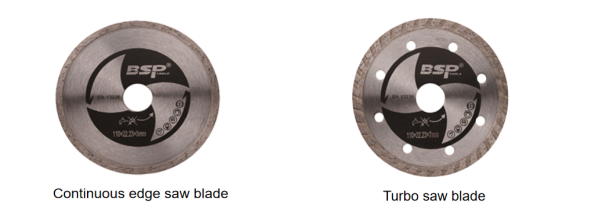
Turbo diamond blades feature a serrated rim, giving them a unique appearance compared to other blades. The serrations (or segments) create air passages that allow for improved airflow and cooling while cutting. This design enhances the cutting speed and keeps the blade from overheating during prolonged use.
Key Features of Turbo Diamond Blades:
- Serrated Rim Design: The jagged edge enhances cutting speed and efficiency.
- Cooling Ability: The serrated rim helps dissipate heat, allowing for longer cutting sessions without overheating the blade.
- Versatility: Turbo blades are suitable for both wet and dry cutting, making them a versatile choice for various job sites.
- Medium-Level Finish: While turbo blades offer faster cutting, they don’t always provide the smoothest finish compared to continuous rim blades.
What Is a Continuous Rim Diamond Blade?
Continuous rim diamond blades, as the name suggests, have a smooth, continuous edge without any breaks or serrations. This type of blade is designed for wet cutting applications, where water is used to cool the blade and minimize dust production. Continuous rim blades are ideal for precision cutting and provide a smooth, clean finish.
Key Features of Continuous Rim Diamond Blades:
- Smooth Rim Design: The uninterrupted edge delivers precise, clean cuts, ideal for delicate materials.
- Wet Cutting Application: Continuous rim blades require water to cool the blade during operation, which prevents overheating and reduces dust.
- Precise Cutting: These blades are designed for high precision and leave a smooth finish, making them ideal for tile, glass, and stone cutting.
- Slower Cutting Speed: Continuous rim blades prioritize precision over speed, which means they cut slower than turbo blades.
Turbo vs Continuous Rim Diamond Blade: A Detailed Comparison
1. Cutting Speed
- Turbo Blades: The serrated edge of turbo blades allows for faster cutting by creating small air pockets that help cool the blade. This design reduces friction and enables the blade to cut more aggressively, making it ideal for projects that require speed, such as cutting concrete, brick, or masonry.
- Continuous Rim Blades: These blades are slower compared to turbo blades due to their smooth edge. However, the trade-off is a much cleaner and more precise cut, making them perfect for cutting delicate materials like tiles, ceramics, and glass. The slower cutting speed is compensated by the quality of the cut, which is essential for projects that demand precision.
2. Cut Quality
- Turbo Blades: While turbo blades excel in cutting speed, the jagged edge can leave behind a rougher finish, especially on delicate materials. This makes them less suitable for tasks requiring a smooth edge or fine finish. However, they are excellent for tougher materials where precision is less critical.
- Continuous Rim Blades: These blades are designed for smooth, chip-free cutting. The continuous rim ensures that materials like tile, porcelain, and glass are cut cleanly without any chipping or cracking. If the quality of the cut is paramount, continuous rim blades are the better option.
3. Material Suitability
- Turbo Blades: Turbo blades are more versatile and can handle a wide range of materials, from hard to abrasive surfaces. They are commonly used for cutting concrete, bricks, pavers, and natural stone. Their ability to cut both wet and dry gives them flexibility in various conditions.
- Continuous Rim Blades: These blades are specifically designed for softer, more brittle materials like tiles, ceramics, porcelain, and glass. Because of their precise cutting ability, they are less suited for harder, abrasive materials like concrete or brick, as they may wear out faster in such applications.
4. Wet vs Dry Cutting
- Turbo Blades: Turbo blades are versatile in that they can be used for both wet and dry cutting. However, using water as a coolant will extend the life of the blade, reduce dust, and improve the overall cutting performance.
- Continuous Rim Blades: These blades are intended primarily for wet cutting applications. The use of water cools the blade, reduces friction, and helps prevent overheating. Continuous rim blades are less effective for dry cutting and may experience premature wear if used without adequate cooling.
5. Blade Longevity
- Turbo Blades: Turbo blades tend to have a longer lifespan when cutting hard materials, especially when used with water. The serrated edge reduces the blade’s contact area with the material, which helps in prolonging the blade’s life, particularly in dry-cutting applications.
- Continuous Rim Blades: The continuous rim design creates more friction during cutting, which can wear the blade out faster, especially when used on harder materials. Using water can significantly extend the blade’s life by reducing heat buildup and maintaining blade integrity.
6. Application Suitability
- Turbo Blades: These blades are commonly used in construction projects where fast cutting through hard materials is needed. They are perfect for masonry work, stone cutting, and concrete cutting. Turbo blades are especially popular among contractors who need to perform quick cuts on tough materials.
- Continuous Rim Blades: Continuous rim blades are ideal for precision work. They are widely used in tiling, kitchen renovations, and other projects that require fine cuts on delicate materials like tiles, porcelain, or glass. The smooth cutting edge ensures there are no chips or cracks, making these blades perfect for detailed work.
How to Choose the Right Blade
When deciding between a turbo or continuous rim diamond blade, the key factors to consider are the material being cut, the speed and precision required, and the specific project’s conditions. Here’s a quick guide to help you choose:
- Choose Turbo Blades if:
- You are cutting hard, abrasive materials like concrete, brick, or masonry.
- Speed is a priority over the quality of the cut.
- You need a versatile blade that can handle both wet and dry cutting.
- Choose Continuous Rim Blades if:
- You are cutting delicate materials like tile, porcelain, or glass.
- Precision and smooth finishes are more important than cutting speed.
- You are working in a wet cutting environment where water is available for cooling.
Conclusion
Both turbo and continuous rim diamond blades have their own distinct advantages depending on the application. Turbo blades offer faster cutting speeds and versatility, making them ideal for heavy-duty tasks. Continuous rim blades, on the other hand, provide superior precision and a smoother finish, making them perfect for more delicate, intricate jobs.
Understanding the differences between these two types of diamond blades allows you to select the right tool for the job, ensuring efficiency, accuracy, and longevity in your cutting tasks. Whether you’re working on a large construction project or a detailed tile installation, the right blade can make all the difference in achieving professional-quality results.