
Concrete is a foundational material in construction, prized for its strength, versatility, and durability. However, its performance heavily depends on proper curing. One critical question often arises in both commercial and residential projects: How long should concrete cure before drilling into it? Whether you’re anchoring bolts, installing handrails, or core drilling for utility access, understanding the optimal curing time is essential to avoid cracking, reduced load-bearing capacity, and costly repairs.
In this comprehensive guide, we’ll explore the science behind concrete curing, the factors that influence when you can drill, the consequences of premature drilling, and best practices for ensuring safe and effective outcomes.

Understanding Concrete Curing
Curing is the process of maintaining adequate moisture, temperature, and time to allow the concrete to achieve its desired strength and durability. Concrete doesn’t “dry” in the conventional sense; instead, it undergoes a chemical reaction called hydration, where cement reacts with water to form hard crystals that bind the mixture together.
This process can take weeks to fully complete. While concrete may seem solid after a few hours or days, it continues to gain strength over time—often up to 28 days or more.
Typical Curing Timeline
The strength of concrete increases with time under proper curing conditions. Here’s a general timeline of strength development:
-
24-48 hours: Concrete hardens enough to walk on.
-
7 days: Concrete reaches approximately 70% of its designed strength.
-
28 days: Concrete reaches its full designed compressive strength (usually 100%).
These timelines can vary based on the mix design, environmental conditions, and application requirements.
When Is It Safe to Drill into Concrete?
General Recommendation: Wait at Least 7 Days
For most non-structural applications, you can safely drill into concrete after 7 days of curing. By this time, the concrete has gained significant strength and is less susceptible to damage from drilling. However, for heavy-duty applications or structural anchoring, waiting the full 28-day curing period is recommended.
Factors That Affect the Curing Time Before Drilling
-
Concrete Mix Design
-
High-performance or rapid-set concrete mixes may gain strength faster.
-
Additives like accelerators can reduce the wait time.
-
-
Ambient Temperature and Humidity
-
Warmer, humid conditions accelerate hydration.
-
Cold or dry conditions slow down the curing process.
-
-
Load Requirements
-
If you’re anchoring heavy equipment, safety standards may require full-strength curing (28 days).
-
Light-duty fixings may allow for earlier drilling.
-
-
Drilling Method
-
Core drilling and diamond drilling are less invasive and can be used earlier.
-
Impact drilling may cause cracking in younger concrete.
-
-
Curing Methods Used
-
Proper water curing, curing blankets, or curing compounds speed up strength gain.
-
Poor curing can leave concrete weak and brittle.
-
Risks of Drilling into Green or Incompletely Cured Concrete
Drilling too early can have serious consequences, especially if the concrete has not yet developed sufficient compressive strength or cohesion. These risks include:
1. Cracking or Spalling
Premature drilling can cause surface cracking or internal spalling, weakening the structure and leading to expensive repairs.
2. Loss of Load Capacity
Anchors installed in under-cured concrete may fail under stress, potentially causing safety hazards or structural damage.
3. Reduced Bond Strength
Adhesive anchors or epoxy resins may not bond properly to immature concrete, leading to slippage or failure.
4. Dusting and Surface Damage
Soft or porous concrete surfaces can break away during drilling, especially with rotary hammers.
Specific Use Cases: Curing Time Recommendations
1. Light Anchoring (Non-Structural)
-
Examples: Shelves, signposts, decorative features.
-
Recommended cure time: 7 days minimum, ideally 14 days.
2. Medium Anchoring (Mechanical Equipment, Railings)
-
Recommended cure time: 14–21 days, depending on load.
3. Heavy Structural Anchoring
-
Examples: Steel columns, heavy machinery bases.
-
Recommended cure time: 28 days to ensure full compressive strength.
4. Core Drilling or Utility Access
-
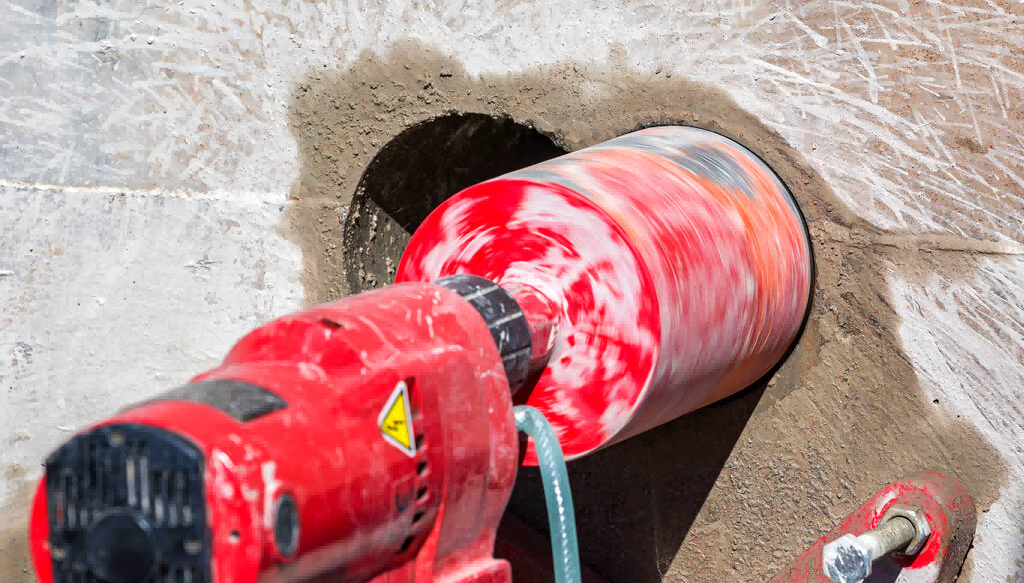
May be done after 7–10 days if using diamond-tipped core bits with low-impact methods.
Best Practices for Drilling into Concrete
To ensure your project’s success and structural integrity, follow these best practices:
1. Perform a Moisture Test
Check if the concrete is fully cured using a surface moisture meter or calcium chloride test. High moisture levels can affect adhesive performance and indicate incomplete curing.
2. Verify Compressive Strength
Use a rebound hammer or request a compression test report (if part of a larger commercial project) to confirm the actual strength before drilling.
3. Choose the Right Drill Bit
Use diamond core bits for precision work and carbide-tipped masonry bits for general purposes. Match the bit to the concrete’s hardness and aggregate size.
4. Use a Vacuum or Dust Extraction System
Minimize silica dust exposure by using a HEPA vacuum during drilling, especially if you’re working indoors or in enclosed spaces.
5. Avoid Percussion or Hammer Settings on Young Concrete
Use rotary-only settings for newer concrete to prevent cracking.
Alternative Solutions for Time-Sensitive Projects
Sometimes, project timelines don’t allow for 28 days of curing. In these cases, you can consider the following alternatives:
1. Fast-Setting Concrete Mixes
Special mixes with accelerators allow for earlier drilling, sometimes within 24–72 hours. Always consult the manufacturer’s guidelines.
2. Post-Installed Anchors Rated for Early Strength Concrete
Some mechanical and chemical anchors are specifically rated for use in green concrete. These may be more expensive but are reliable for urgent applications.
3. Pre-Planned Inserts or Sleeves
Incorporate sleeves or conduit in the original pour to avoid post-curing drilling altogether.
Expert Tips from the Field
-
Mark Drilling Locations Before Pouring: Use templates or embedded markers to make post-curing drilling faster and more accurate.
-
Always Follow Manufacturer Specs: Adhesive and mechanical anchor systems have strict guidelines on the minimum concrete strength and curing time.
-
Document the Curing Process: For commercial projects, maintaining a curing log can help demonstrate compliance with engineering standards.
Frequently Asked Questions (FAQs)
Q1: Can I drill into concrete after 3 days?
You can, but it’s risky. At 3 days, concrete may only have 30-50% of its strength. For non-critical holes or if using non-percussion tools, it may be acceptable with caution.
Q2: What is the best tool for drilling into cured concrete?
A rotary hammer drill with SDS bits for general use or a diamond core drill for precise or large-diameter holes.
Q3: Will drilling weaken the concrete structure?
If done correctly, no. But excessive or early drilling can cause cracks and compromise integrity.
Q4: How can I speed up curing so I can drill sooner?
Use curing blankets, accelerators, or warm water in the mix, and avoid exposure to cold or dry air during the first 72 hours.
Conclusion
So, how long should concrete cure before drilling? The answer depends on your application, but a safe rule of thumb is to wait at least 7 days for general drilling and 28 days for structural or load-bearing installations. Rushing the process risks structural damage, lower bond strength, and safety hazards.
Understanding the curing timeline, using the right equipment, and following best practices ensures a successful and durable installation. In construction, patience pays off—and waiting for concrete to properly cure is no exception.
Need drilling tools or diamond core bits for your next project? Choose high-performance options from trusted manufacturers to make your work faster and safer.