
When tackling a DIY home improvement project, cutting concrete might seem like an intimidating task, especially if you’re not familiar with the right tools for the job. Concrete is a strong and durable material, which is why it’s used for everything from foundations to driveways. But can you cut concrete with a circular saw? The short answer is yes, with the right equipment, technique, and safety precautions.

In this article, we’ll explore how to cut concrete using a circular saw, the types of blades you’ll need, the tools required, safety measures to follow, and tips for achieving a clean, precise cut.
Understanding Concrete Cutting
Concrete cutting is typically done with specialized tools such as diamond saws, angle grinders, or wet saws. However, a circular saw can also be used effectively to cut through concrete, particularly for smaller projects like cutting concrete pavers, slabs, or for making repairs in concrete surfaces.
While a circular saw is not typically the first tool that comes to mind when thinking of concrete cutting, with the right blade and preparation, it can be a great option for certain tasks. The key is using a diamond blade that’s designed to handle the abrasive nature of concrete.
Types of Circular Saws for Concrete Cutting
Not all circular saws are suitable for cutting through concrete. For smaller jobs, you can use a standard handheld circular saw, but for more robust or professional use, a more specialized model may be required. There are two main types of circular saws you can use for cutting concrete:
- Standard Handheld Circular Saws
A regular circular saw, typically used for wood and other soft materials, can be adapted for concrete cutting by attaching a diamond blade designed for cutting through concrete, brick, and stone. The power of these saws varies, with some more powerful models being capable of cutting through concrete up to a certain depth, usually around 2.5 inches. - Cordless Circular Saws
Battery-powered circular saws offer convenience and mobility, but they might not have the same cutting power as their corded counterparts. If you’re considering using a cordless saw, make sure it has a high enough power rating and is paired with a suitable diamond blade for cutting concrete. - Masonry Circular Saws
Specifically designed for cutting through tough materials such as concrete, masonry saws have higher RPMs and the ability to handle thicker, more challenging materials. They come with a reinforced motor that can withstand the higher stress of cutting through concrete and similar hard materials.
Choosing the Right Blade for Cutting Concrete
Choosing the correct blade is essential when cutting concrete with a circular saw. A standard wood-cutting blade will not work on concrete, and attempting to use one could damage both the blade and the saw. For concrete cutting, you’ll need a diamond blade.
Diamond blades are equipped with diamond segments that can cut through hard materials such as concrete, brick, and stone. These blades come in two main types: segmented and continuous rim.
- Segmented Blades: These blades have gaps (or segments) between the diamonds, which allow for more efficient cutting by reducing the friction that builds up during the process. They are ideal for general cutting through concrete.
- Continuous Rim Blades: These blades have a smooth, continuous edge and are typically used for clean, precise cuts. They’re great for cutting softer concrete or for applications where a smooth finish is required, such as cutting concrete pavers.
When choosing a blade, consider the thickness and hardness of the concrete. For standard residential concrete, a 7-inch blade with a diamond edge will suffice for many small projects. For larger jobs, like cutting through thicker concrete, you may need a 12-inch blade.
How to Cut Concrete with a Circular Saw: Step-by-Step Guide
If you’re ready to use a circular saw to cut concrete, follow these steps to ensure a clean and accurate cut:
1. Preparation
Before starting, take the necessary steps to prepare both the area and yourself. Concrete cutting can produce dust and debris, so ensure you’re ready with the right gear.
- Tools and Materials: You’ll need a circular saw (preferably with a high power rating), a diamond blade suitable for cutting concrete, a measuring tape, a pencil or chalk for marking the cut, safety gear (goggles, dust mask, ear protection, gloves), and a straight edge or guide.
- Mark the Cut Line: Using a pencil or chalk, measure and mark the exact location where you need to make the cut. A straight edge or guide can help you keep the cut as straight as possible.
- Prepare the Work Area: Clear the area around you to ensure safety and space to maneuver the saw. If you’re cutting concrete that’s already laid down, make sure the surface is stable and secure.
2. Set Up the Circular Saw
- Attach the diamond blade to the circular saw, ensuring it’s securely mounted according to the manufacturer’s instructions.
- If the saw is adjustable, set the cutting depth to around 1/4 inch deeper than the thickness of the concrete to allow the blade to cut through the material fully. If you’re cutting a very thick slab of concrete, it may be better to make multiple passes, each time cutting a little deeper.
3. Make the Cut
- Start the Saw: Start the saw and allow it to reach full speed before making contact with the concrete.
- Cut Slowly and Steadily: Move the saw along the marked line in a smooth, steady motion. Avoid forcing the saw; let the diamond blade do the work. Pushing the saw too hard can cause the blade to overheat or bind, which could damage the saw or the blade.
- Make Multiple Passes: If the concrete is thick, don’t try to cut through it in a single pass. Instead, make a shallow cut first, then make a second pass, gradually increasing the depth with each cut. This will help prevent the saw from overheating.
4. Use Water for Cooling (Optional)
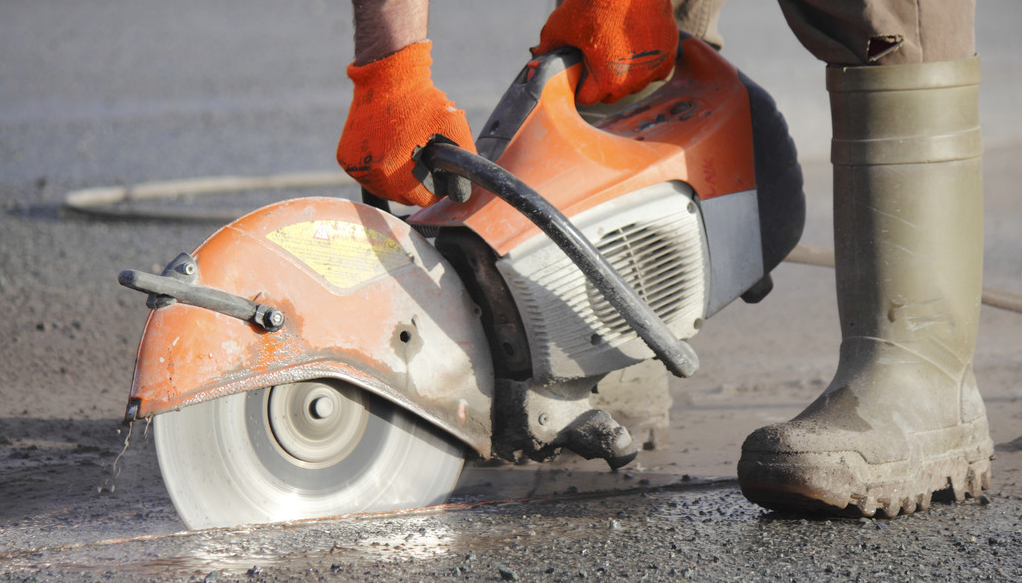
Concrete cutting can generate significant heat, which can wear out the blade quickly. Some saws have a water attachment for wet cutting, which helps cool the blade and reduce dust. If your circular saw does not have a water attachment, you can use a spray bottle to apply water to the cut area, or use a wet saw if it’s available.
5. Finishing the Cut
Once you’ve made the cut, allow the saw and blade to cool before removing them. If the concrete has any rough or jagged edges, you can use a grinder to smooth them out. Use a broom or vacuum to clear away the concrete dust and debris from your work area.
Safety Considerations
Cutting concrete with a circular saw can create a lot of dust and debris, so safety should be your top priority. Here are some tips to ensure you’re safe while cutting concrete:
- Wear Personal Protective Equipment (PPE): Always wear safety goggles, ear protection, a dust mask, and gloves. Concrete dust can be harmful to your eyes and lungs, and the noise from the saw can be damaging to your hearing.
- Ventilation: Work in an area with good ventilation. If you’re cutting indoors, ensure that there’s adequate airflow to help clear the dust away.
- Check the Saw and Blade: Before starting, inspect your circular saw and blade to make sure they’re in good condition. A dull or damaged blade can lead to poor cutting results and increase the risk of accidents.
Conclusion
Cutting concrete with a circular saw is certainly possible, but it requires the right equipment, preparation, and technique. By using the proper diamond blade, following the steps outlined above, and adhering to safety measures, you can achieve clean, accurate cuts in concrete. Whether you’re working on a small home improvement project or need to make some repairs, a circular saw can be a handy tool for the job when used correctly.
Remember that while a circular saw is versatile, there are limits to its cutting depth. For larger or thicker concrete cutting jobs, you may want to consider other tools like a masonry saw or a wet saw. But for smaller concrete cutting tasks, a circular saw is an effective and cost-efficient solution that can get the job done.